Strength, Recovery & Bones
The Walking Pad Guide: How to Stay Active All Winter
How to keep moving when it's dark at 5 and too cold to walk outside.
Why does winter make us all couch potatoes?
Be honest: when's the last time you went for a walk after dinner in January?
It's dark by 5:00. It's cold. The sidewalk might be icy. And your couch is right there, with a blanket and something good on TV. So you skip the walk tonight. And tomorrow. And somehow it's March.
If that sounds like you, you're in good company. Researchers who track people's steps across the seasons keep finding the same thing: we move less in winter. For a lot of us, the winter walk doesn't just get shorter. It disappears altogether.
A little less movement for a few months might not sound like a big deal. But after menopause, when our metabolism, muscle and blood sugar are already shifting, those lazy winter months can quietly add up.
So here's my favorite fix. It doesn't need willpower, a gym membership, or a single step outside: a walking pad.
Why a walking pad takes away every excuse
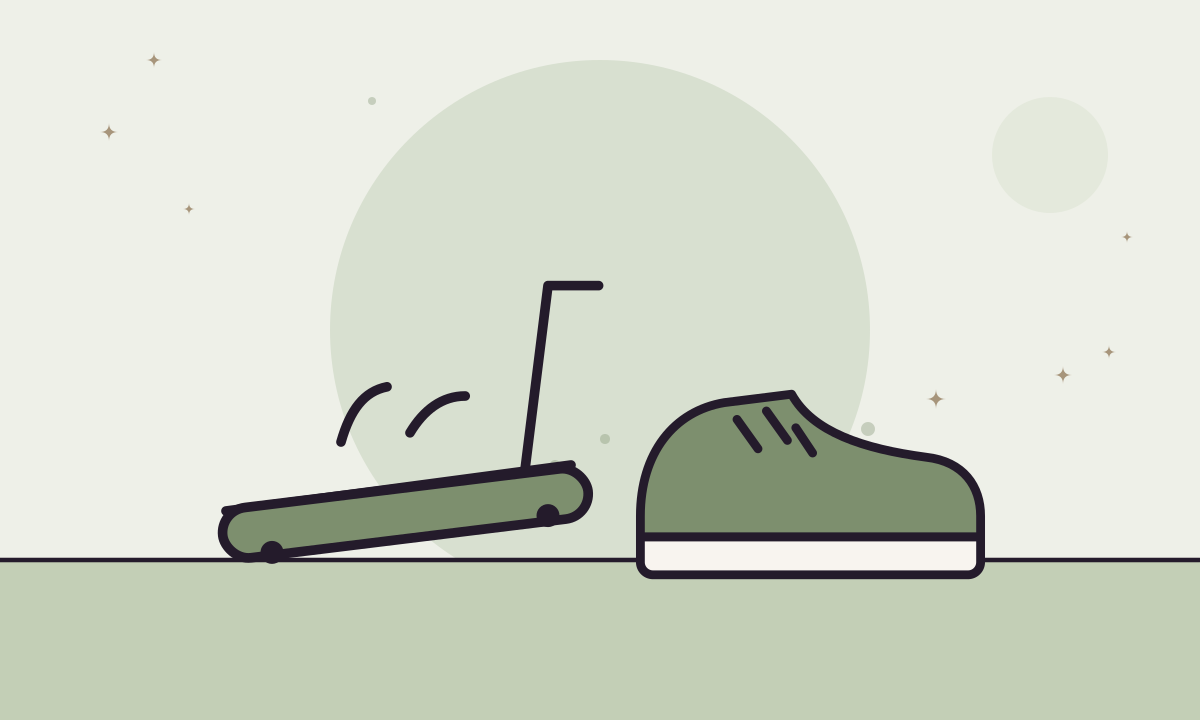
If you haven't seen one, a walking pad is basically a slim, no-frills treadmill made for walking. There are no big handrails and no giant console. It's just a low belt that slides under your couch or bed when you're done.
Think about everything that usually stops you from walking in winter:
-
"It's too cold." You're in your living room in your fuzzy socks.
-
"It's too dark." You can walk at 6 a.m. or 9 p.m. Your lamp works fine.
-
"The roads are icy." No ice in your living room, and no worrying about a fall.
-
"I don't have time." You were going to watch that show anyway. Now you're watching it on your feet.
-
"I hate the gym." Same. You never have to go.
That's what makes it so different from every other fitness plan you've tried. You're not adding a workout to your day. You're just turning time you were already spending, like TV, phone calls, scrolling or podcasts, into time you're moving.
Honestly, that's the whole secret. The easiest movement is the kind you don't have to think about.
What all those extra steps actually do for you after 50
Walking gets underrated because it's so simple. But it does a lot more than people think, especially for us.
You don't need 10,000 steps. That number came from a 1960s Japanese marketing campaign, not science. A large Harvard study of nearly 17,000 women (average age 72) found that women who averaged about 4,400 steps a day had noticeably lower death rates over about four years than women who took about 2,700. The benefits kept climbing up to about 7,500 steps a day, then leveled off. (It's an observational study, so it shows a link, not proof of cause and effect. Still, it's encouraging.) A walking pad can easily add a few thousand steps to a winter day.
It helps with blood sugar. Research on short walks after meals shows that even a few minutes of light walking after you eat can soften the blood sugar spike, compared with sitting. That matters after menopause, when many of us become more insulin resistant.
It's easy on your joints. Walking is low impact, and the cushioned belt on a walking pad is often gentler than concrete.
It may help your mood and sleep. Movement is one of the best-studied mood boosters we have, and the dark winter months are exactly when many of us need it most. One small study of Japanese adults even found that people who stepped more in winter tended to sleep better. That's early research, but it lines up with what a lot of women notice.
One honest note: walking is wonderful, but it doesn't replace strength training. After menopause, lifting something heavy a couple of times a week is still the best way to protect your muscle and bones. Think of your walking pad as your daily movement and strength training as your muscle insurance. You want both.
How to actually use it
We've all bought the exercise thing that ended up holding laundry. Here's how to make sure your walking pad gets used. (Heads up: some links in this article are affiliate links, which means I may earn a small commission if you buy through them, at no extra cost to you. I only share things I'd recommend to a friend.)
1. Tie it to TV time. This is the big one. Make one simple rule: when the TV is on, you're walking. Even one episode a night is 30–45 minutes of easy movement you barely notice.
2. Take a walk after dinner, just a short one. Ten to fifteen minutes on the pad after your biggest meal is a great habit for blood sugar, and it beats heading straight for the couch.
3. Pair it with a standing desk. If you work from home, slide your walking pad under a standing desk ([ADD-STANDING-DESK-AFFILIATE-LINK]) and walk through emails, calls and Zoom meetings with the camera off. A slow 1.5 mph is plenty while you type.
4. Start slow. Begin around 1 to 2 mph and keep it comfortable. You should be able to chat on the phone without getting winded. You can always go faster later.
5. Leave it out. If it's tucked under the couch, it's easy to forget. If it's sitting in front of the TV, it's an invitation.
6. Break it up. You don't need one long session. Ten minutes in the morning, ten at lunch and twenty during your show all count.
7. Watch your steps climb. If you have a phone or watch that counts steps, check it at the end of the week. Seeing those winter numbers go up instead of down is very motivating.
What to look for when you're shopping for a walking pad
There are a lot of walking pads out there, and they're not all equal. Here's what actually matters:
-
Quiet motor. You'll be using it while watching TV, on calls, or while someone else is asleep. Look for one that reviewers describe as quiet.
-
Slim and easy to store. Make sure it's thin enough to slide under your couch or bed, and that it has wheels so it's easy to move.
-
Speed range. For walking, about 0.5 to 4 mph is all you need. You don't need a running machine.
-
Weight capacity. Check the max user weight and pick one with some room to spare. Sturdier frames usually last longer.
-
Belt size. A wider, longer belt feels more stable and less like you're walking a tightrope.
-
Simple controls. A remote or an app is handy so you're not bending down to change the speed.
-
Optional fold-up handrail. If balance is a concern, some models have a handle that folds up for support and down for storage.
My favorite walking pad
After trying a few, this is the one I keep coming back to. It's quiet, slides right under the couch, and makes walking during my evening shows completely effortless.
👉 Shop my favorite walking pad →
Want to see everything else I use and love? You can find it all in my Amazon storefront.
The bottom line
Winter doesn't have to be the season you stop moving. You don't need to brave the cold or drag yourself to a gym. You just need to make movement so easy that it happens on its own.
A walking pad does exactly that. Put it in front of the TV, hop on during your favorite show, and let those steps add up while you're cozy at home. By spring you won't be starting over. You'll be ahead.
And if weight loss is one of your goals, a walking pad is one piece of a bigger, surprisingly simple plan. I break the whole thing down in The Easiest Way to Lose Weight After Menopause (Seriously, It's This Simple).
Keep reading
- The Easiest Way to Lose Weight After Menopause (Seriously, It's This Simple)
- Why Muscle Loss Speeds Up After Menopause (and How to Stop It)
- 5 High-Protein Crockpot Recipes You Can Dump and Forget
This article is for educational purposes only and isn't medical advice. Talk with your doctor before starting a new exercise routine, especially if you have balance, heart, or joint concerns.